Machine Learning vs. Deep Learning: Tracing Their Evolution and Distinctions
March 15, 2025
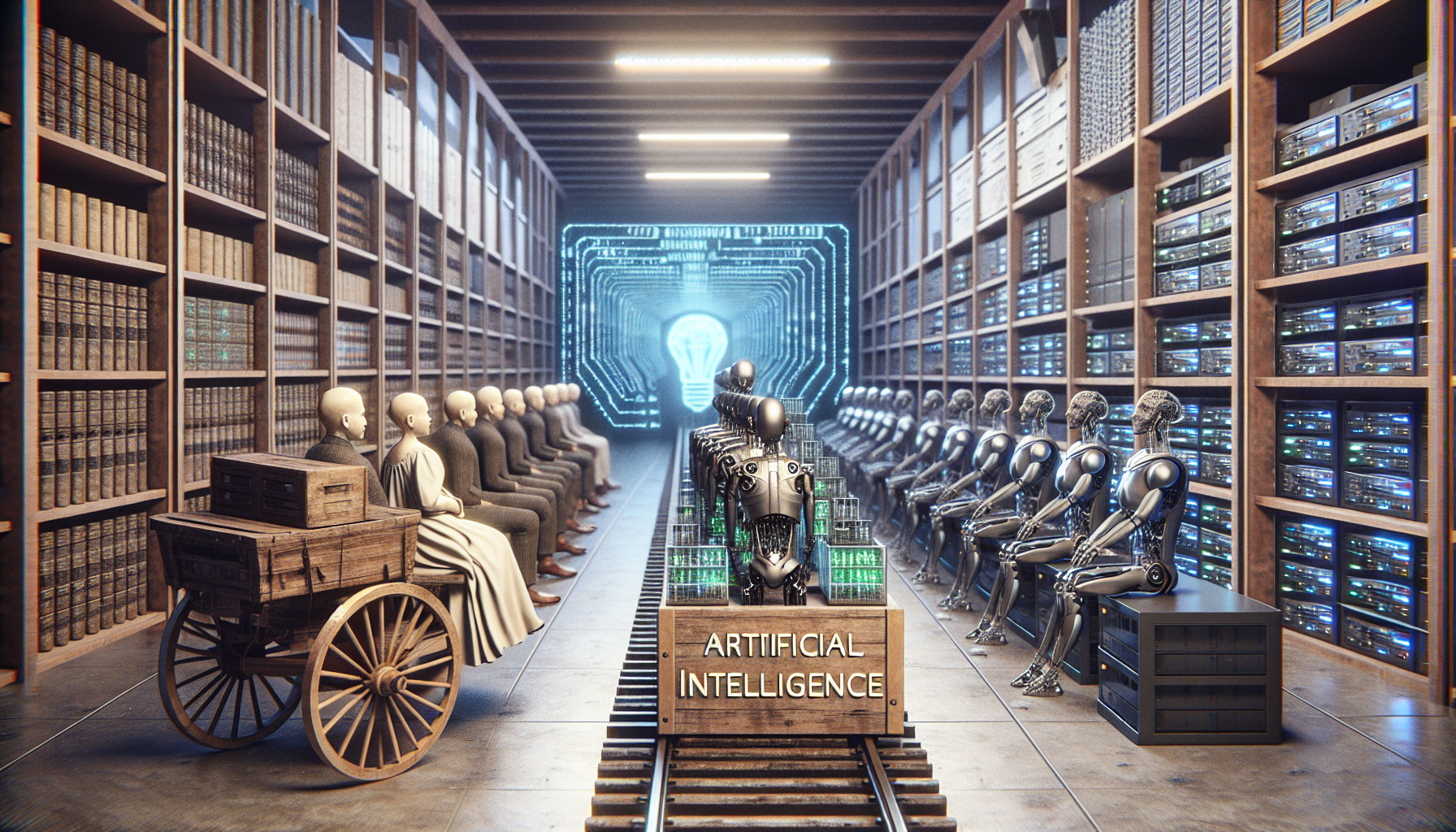
The journey of artificial intelligence is a fascinating tale of innovation, marked by the progressive evolution of machine learning and deep learning. Though these terms are often used interchangeably, they represent distinct technologies with unique historical paths and applications. Understanding their differences requires delving into the intricacies of their development over time.
Machine learning, a subset of artificial intelligence, emerged as a paradigm that enabled computers to learn from data without explicit programming. Its roots can be traced back to the early concepts of pattern recognition and the pioneering work on algorithms that allowed systems to learn from and make predictions based on data. The initial strides in machine learning were guided by statistical methods, focusing on deriving patterns and insights from datasets through algorithms like decision trees and k-nearest neighbors.
As computational power expanded, so did the capabilities of machine learning. A notable milestone was the introduction of neural networks—structures inspired by the human brain's architecture. These networks, consisting of interconnected nodes or "neurons," facilitated a new era of learning. However, early neural networks faced limitations due to computational constraints and the challenge of effectively training deep architectures.
Deep learning, a more recent and advanced subset of machine learning, arose to address these limitations. It leverages multi-layered neural networks, known as deep neural networks, to model complex patterns in data. The resurgence of interest in deep learning was fueled by breakthroughs in algorithms, increased computing power, and the availability of large datasets, often referred to as "big data."
One of the key distinctions between machine learning and deep learning lies in feature extraction. Traditional machine learning models often require manual feature extraction—a process where domain experts identify and select relevant features from raw data. In contrast, deep learning models automatically discover intricate structures within data through hierarchical layers, reducing the need for manual intervention. This capability is particularly advantageous in domains such as image and speech recognition, where raw data is abundant, and feature extraction is complex.
The historical evolution of these technologies also highlights their differing computational requirements. Machine learning algorithms, while simpler, are generally more efficient and require less data and computing power. Conversely, deep learning models demand substantial computational resources and vast amounts of labeled data to achieve optimal performance. This necessity has driven advancements in hardware, notably the development of graphics processing units (GPUs) and specialized processors designed to accelerate deep learning tasks.
Despite their differences, both machine learning and deep learning share a common foundation in statistical learning theory. This foundation provides a rigorous framework for understanding the generalization capabilities of learning algorithms. It also underscores the importance of balancing model complexity with the risk of overfitting—creating models that perform well on training data but poorly on unseen data.
The historical trajectory of these technologies is marked by their growing impact across various industries. In healthcare, machine learning algorithms assist in predictive analytics and personalized medicine, while deep learning models power breakthroughs in medical imaging and genomics. In the automotive industry, machine learning aids in developing intelligent systems for vehicle diagnostics, whereas deep learning drives advancements in autonomous driving technologies.
As we reflect on the historical perspectives of machine learning and deep learning, it is essential to consider their future trajectories. With ongoing advancements in quantum computing, the boundaries of what these technologies can achieve are set to expand even further. The convergence of machine learning with other fields, such as neuroscience and cognitive science, promises new insights and capabilities.
The evolution of machine learning and deep learning presents an intriguing narrative of technological advancement, characterized by unique challenges and triumphs. As these fields continue to evolve, they invite us to ponder the future of artificial intelligence and its potential to reshape our world. In this era of rapid technological growth, how will these technologies redefine our understanding of intelligence, and what new frontiers will they unlock?