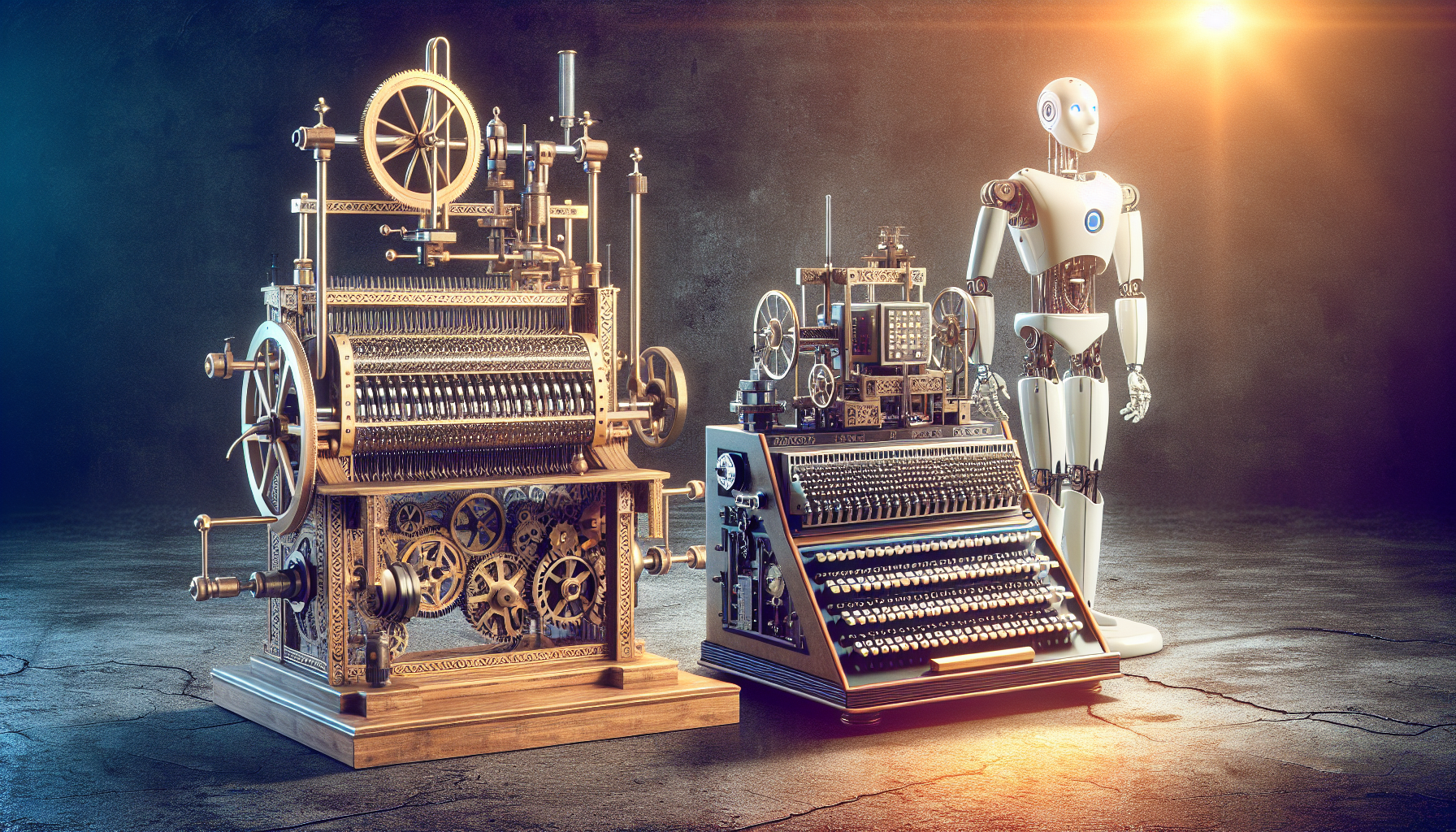
AI in Retail: From Bartering to Bot Bargains – A Comedic Journey Through Time
December 12, 2025
Once upon a time, in a land not so far away, if you wanted a new pair of shoes, you had to exchange a chicken for them. Yes, that’s right—a real, clucking chicken. Bartering was the epitome of retail therapy. Fast-forward to today, and you can buy shoes with a few taps on your smartphone, while complaining to a chatbot about why the color “sunset orange” looks suspiciously like “traffic cone.”
Welcome to the world of artificial intelligence in retail, where the only chickens involved are the ones in your online grocery cart. It’s a place where algorithms understand you better than your mom does, and chatbots have a knack for offering discounts at precisely the moment you’re ready to abandon your cart. But how did we get here? Let’s take a humorous stroll down the memory lane of retail, where AI has redefined the customer experience—no chickens required.
Before AI was the retail rockstar, shopping was an ordeal akin to a medieval quest. Remember when finding a store was like searching for a needle in a haystack because, well, there was no GPS? Enter the era of the internet, where browsing for hours on dial-up was considered a Saturday night well spent. Retailers were thrilled because now they could send you spam emails instead of just junk mail. But that was just the beginning.
AI tiptoed into retail like a shy intern, starting with recommendation engines. The early iterations were like that friend who insists you’ll love their favorite band, only for you to discover it sounds like nails on a chalkboard. But as AI matured, it began to understand our shopping habits, preferences, and the fact that we really don’t need another pair of socks, no matter how often we look at them online.
One of AI’s first magic tricks in retail was personalizing the customer experience. It was like the retail genie, minus the lamp, granting your shopping wishes before you even knew you had them. Suddenly, your favorite stores knew your shoe size, your penchant for polka dots, and your aversion to vertical stripes. They knew you better than your own wardrobe did—and without the judgmental side-eye.
Chatbots, the retail world’s answer to overzealous sales clerks, emerged as AI’s most visible presence. Initially, these bots were about as useful as a screen door on a submarine, offering scripted responses that left customers more frustrated than a cat in a dog park. But with time and a lot of machine learning, chatbots evolved into helpful, albeit occasionally cheeky, assistants. They can now handle everything from processing returns to offering style advice, always with the tact of a well-meaning aunt.
The integration of AI into retail didn’t just enhance customer service; it also revolutionized inventory management. Gone are the days of overstocked shelves and unsold seasonal sweaters. Today, AI predicts buying trends with the accuracy of a psychic octopus, ensuring that retailers stock just enough to meet demand without resorting to the dreaded clearance rack. Though, let’s be honest, who doesn’t love a good clearance sale?
AI in the retail sphere has also taken the concept of security to a new level. No longer are we reliant on suspiciously friendly security guards or cameras that miss everything except the janitor’s lunch break. AI monitors for fraud with the finesse of a digital Sherlock Holmes, catching suspicious transactions faster than you can say, “identity theft.”
But perhaps the most delightful aspect of AI in retail is its ability to make shopping fun again. Virtual fitting rooms let you try on clothes without the hassle of fitting room queues or that awkward strip-and-slip dance. Augmented reality apps allow you to see how a couch looks in your living room, avoiding the dreaded “it looked smaller in the store” syndrome. It’s retail therapy on steroids, minus the side effects.
As we marvel at how artificial intelligence has transformed retail, one can’t help but ponder what the future holds. Will we have personal shopping robots that sense our moods and suggest chocolate on a bad day? Will virtual reality allow us to shop in Parisian boutiques from the comfort of our couch? The possibilities are as endless as the internet rabbit holes we fall into.
In this brave new world of AI-driven retail, we might just find ourselves looking back at the days of bartering with a hint of nostalgia. After all, there’s something charming about trading farm animals for fashion. But as we embrace the ease and efficiency of AI, it’s worth considering: will the retail revolution ever truly replace the joy of a spontaneous splurge or the thrill of finding a hidden gem? Only time—and perhaps a few innovative algorithms—will tell.