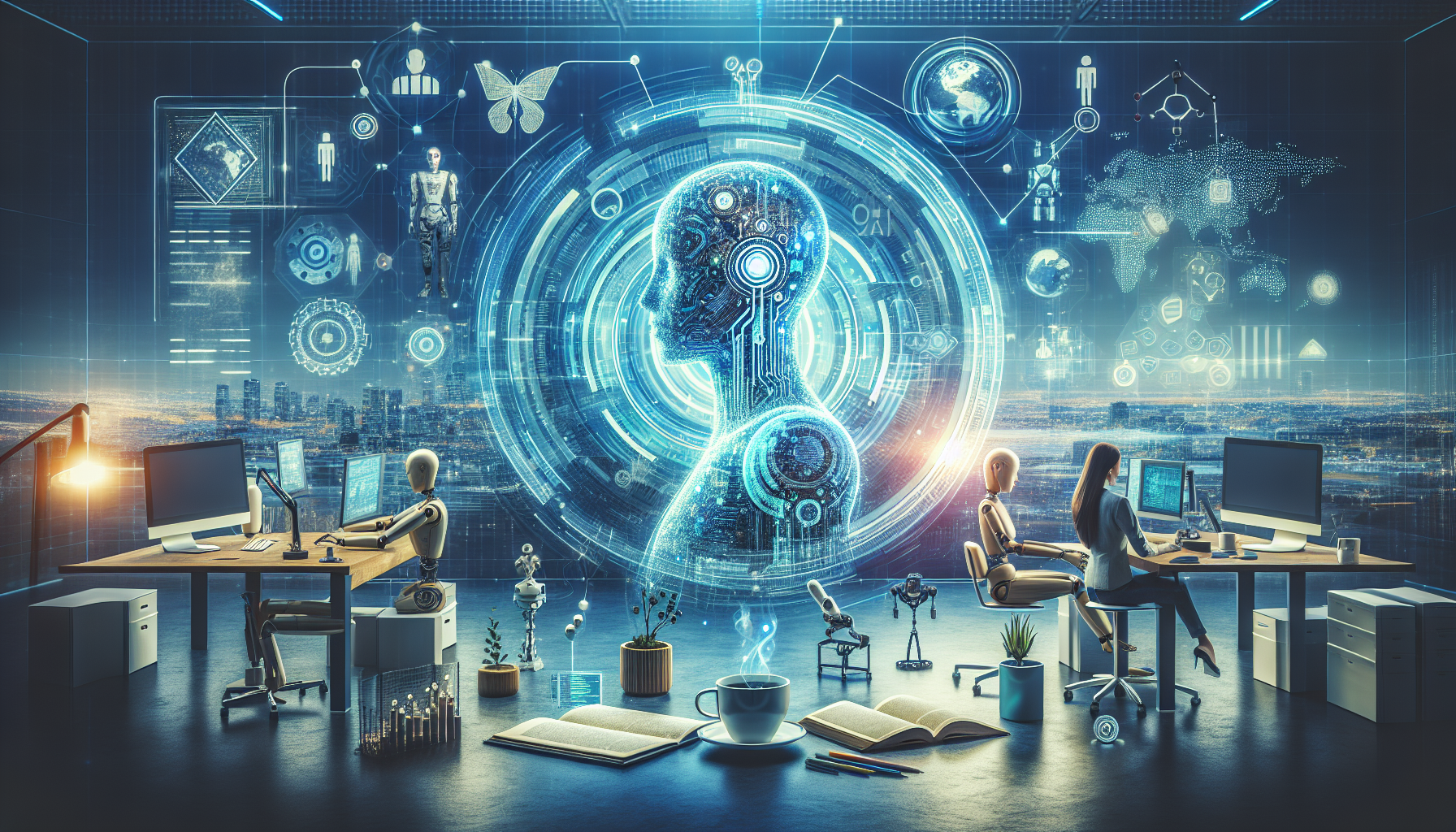
AI for Social Good: How Artificial Intelligence Tackles Global Challenges
March 9, 2026
Imagine a world where artificial intelligence not only revolutionizes industries but also solves some of humanity's most pressing challenges. This isn't science fiction; it's happening right now. From improving healthcare outcomes to combating climate change, AI is playing a transformative role in fostering positive social change. But how exactly is this happening, and what trends should we be paying attention to?
Consider healthcare, a field where AI's potential is truly awe-inspiring. Machine learning algorithms are now being used to analyze medical images, predict patient outcomes, and even discover new drugs. These advancements aren't just about efficiency; they're fundamentally altering how we approach health and wellness. For instance, AI systems can now predict outbreaks of diseases by analyzing patterns in data that were previously invisible to the human eye. This kind of predictive power is crucial for deploying resources effectively and saving lives.
Moving beyond healthcare, AI is making waves in education. Personalized learning is no longer just a buzzword. With the help of AI, educational content can be tailored to individual learning styles and paces, ensuring that no student is left behind. AI-driven platforms assess student performance in real-time, offering insights that educators can use to adjust their teaching methods. It's a shift that promises not only to improve educational outcomes but also to democratize access to quality education on a global scale.
Environmental sustainability is another area where AI is making a significant impact. Climate change is one of the most daunting challenges of our time, and AI offers tools to tackle it head-on. Through advanced data analytics, AI can optimize energy usage, reduce waste, and even predict environmental hazards. For example, AI-driven models can forecast weather patterns with unprecedented accuracy, allowing for better preparation and response to natural disasters. Additionally, AI is helping in the development of sustainable agriculture practices, ensuring that we can feed a growing population without depleting the planet's resources.
A fascinating trend in AI for social good is its application in crisis management. Consider humanitarian efforts in disaster-stricken areas. AI tools can analyze satellite images to assess damage, prioritize areas needing immediate aid, and efficiently allocate resources. These capabilities are invaluable for organizations working in the field, allowing them to operate with greater precision and speed than ever before.
But what about the ethical considerations? As AI becomes more ingrained in efforts for social good, questions about data privacy, algorithmic bias, and transparency become increasingly important. It's essential to ensure that AI systems are designed and implemented with ethical principles in mind. This includes fostering inclusivity in AI development teams to mitigate biases and ensure that solutions are equitable for all communities. The conversation around AI ethics is evolving, with stakeholders from various sectors coming together to create guidelines and frameworks that prioritize human rights and fairness.
One might wonder about the challenges that lie ahead. While the potential of AI for social good is immense, there are barriers to its widespread adoption. Issues such as funding, access to technology, and the digital divide need to be addressed to ensure that the benefits of AI are accessible to all. Additionally, collaboration between governments, private sectors, and non-profit organizations is crucial to creating scalable and sustainable AI solutions.
As we look to the future, the question isn't whether AI will continue to play a pivotal role in addressing global challenges, but rather how we can maximize its impact responsibly. How can we ensure that AI's advancements are aligned with the values of sustainability, equity, and inclusivity? These are the conversations we need to be having, bringing together voices from all sectors to explore the full potential of AI for social good.
The journey of AI in solving global challenges is just beginning, and its trajectory offers both promise and complexity. As we navigate this path, it's worth pondering: How can we harness AI's capabilities to not just react to challenges but to anticipate and prevent them? This is the frontier we stand on, and the possibilities are as boundless as our collective imagination.