The Economic Renaissance Through AI: Catalyzing Growth and Job Evolution
January 6, 2026
The hum of artificial intelligence is more than just a whisper in the corridors of economic transformation. It is a clarion call heralding an era where growth and opportunity are ripe for the taking. As AI weaves its intricate tapestry across industries, it promises not only to revolutionize the way businesses operate but also to redefine the very nature of work itself. While the narrative often oscillates between the promise of growth and the specter of job displacement, it is the future predictions that offer a canvas painted with both challenges and opportunities.
In the realm of economic growth, AI is a formidable catalyst. It is not merely enhancing efficiencies but is also unlocking new avenues for innovation that were previously unimaginable. Businesses are witnessing a paradigm shift where AI is enabling them to harness data in unprecedented ways, driving decision-making processes that are both smarter and faster. Consider the manufacturing sector, where AI-driven automation is not simply about replacing human labor but optimizing production lines, reducing waste, and ensuring quality control at scales previously thought unachievable.
Moreover, AI is fostering a new wave of entrepreneurship. Start-ups that leverage AI technologies are sprouting across the globe, challenging traditional business models and creating new markets. These ventures often operate with agility and innovation at their core, demonstrating how AI can be a fertile ground for cultivating ideas that transcend conventional boundaries. As companies continue to integrate AI into their operational frameworks, the economic landscape is poised for a renaissance that could uplift entire communities and drive significant macroeconomic growth.
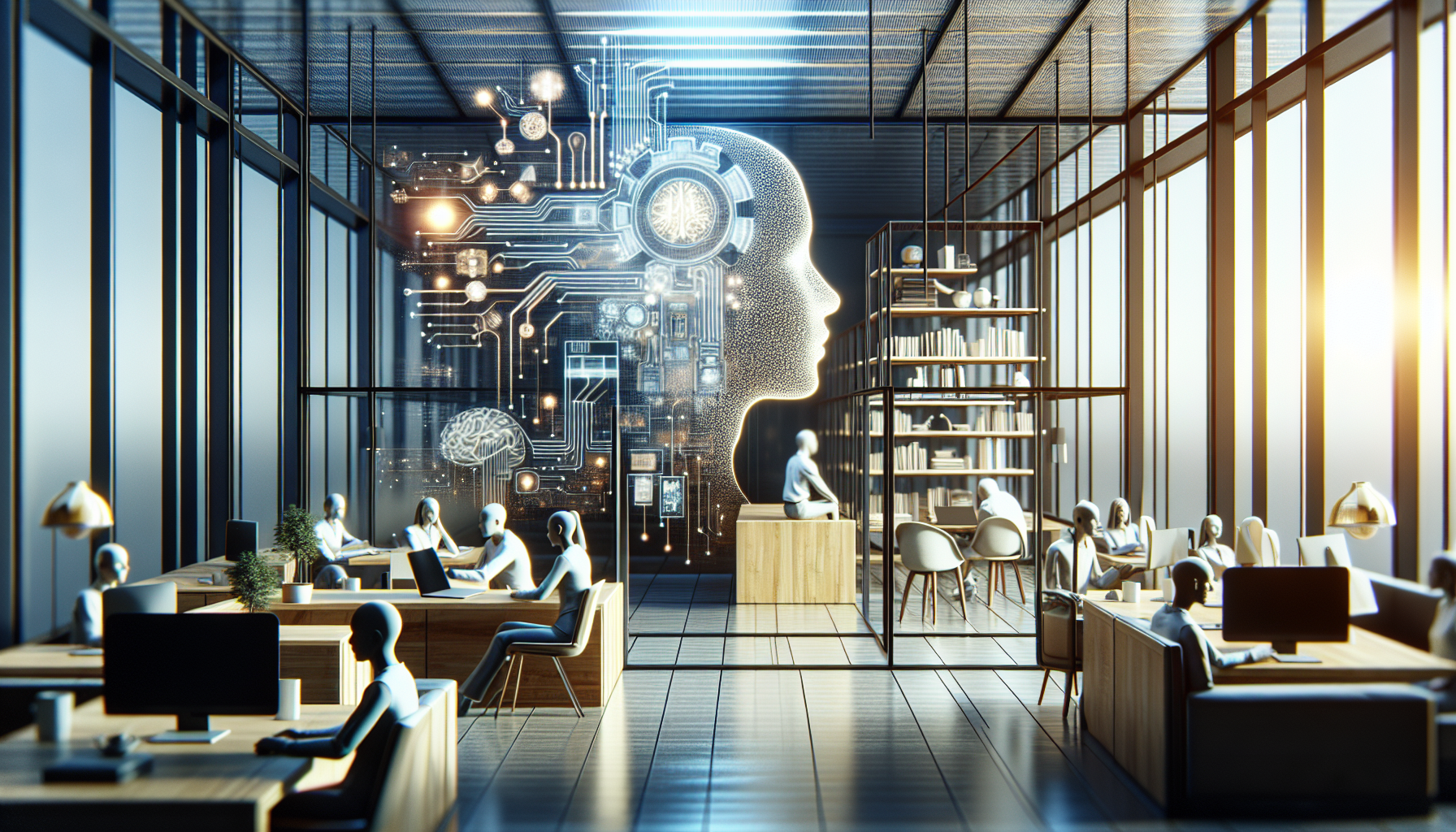
Yet, with transformation comes the inevitable question of job displacement. The narrative of AI as a harbinger of job loss is pervasive, but it is crucial to reframe this discourse towards job evolution. AI is not simply making certain jobs obsolete; it is transforming the nature of work, prompting a shift in the skills that the workforce needs to thrive. The future of work is one where humans and machines collaborate, each complementing the other’s strengths. AI can handle repetitive tasks with precision and speed, freeing humans to engage in more creative, strategic, and emotionally intelligent endeavors.
Education and reskilling are paramount in this transition. Institutions and governments are increasingly recognizing the need to prepare the workforce for a world where AI is a constant companion. This involves a focus on STEM fields as well as the cultivation of soft skills such as critical thinking and empathy—areas where humans possess a distinct advantage over machines. The future workforce is one that is adaptable, continuously learning, and capable of navigating an ever-evolving technological landscape.
In the context of specific industries, healthcare and finance stand out as sectors poised for profound transformation. In healthcare, AI's predictive analytics are revolutionizing diagnostics and personalized medicine. Physicians are empowered with tools that not only enhance patient outcomes but also make healthcare more accessible. In finance, AI is reshaping risk management, fraud detection, and customer service, leading to more secure and efficient financial ecosystems.
The economic impact of AI is not confined to developed nations alone. Emerging economies are also harnessing AI’s potential to leapfrog traditional stages of development. By integrating AI into various sectors like agriculture and education, these nations are setting a foundation for sustainable growth that can bridge the gap between the developed and developing world.
As we peer into the horizon, the question is not whether AI will impact the economy, but how profoundly and equitably it will do so. The potential for AI to drive inclusive growth is immense, but it requires intentional strategies and policies that ensure benefits are distributed fairly across society. The promise of AI is a future where economic growth is not just a statistic but a lived reality that uplifts all corners of society.
What can we do as individuals, organizations, and governments to harness AI's full potential for economic prosperity? How can we ensure that the AI-driven economic renaissance is one that fosters equity and opportunity for all? As we navigate these questions, the path forward is clear: embrace the transformative power of AI with both foresight and responsibility, ready to seize the opportunities it presents for a brighter, more inclusive future.