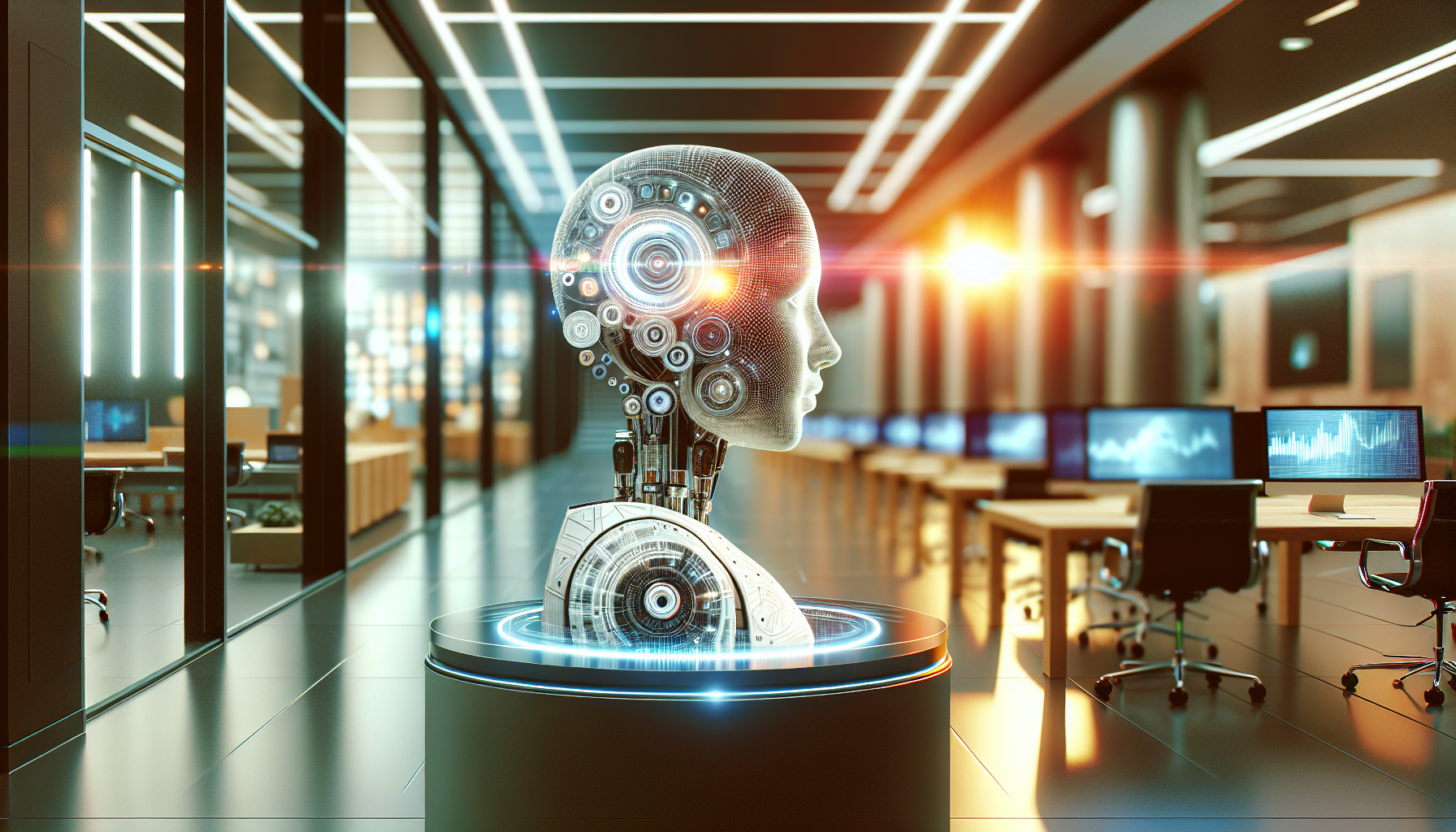
Ethical Dilemmas in AI: Are We Building Machines That Mirror Our Worst Traits?
April 19, 2026
Artificial intelligence stands as one of the most transformative forces of our era. Yet, beneath the surface of technological marvel lies a complex web of ethical challenges that demand our immediate attention. As we champion the marvels of AI, we must confront a sobering question: in our quest to create machines that mimic human intelligence, are we inadvertently embedding the worst of human biases and errors into these systems?
The allure of AI is undeniable. It promises precision, efficiency, and the ability to process data at scales that far exceed human capability. However, this very strength is also its Achilles' heel. The algorithms powering AI are only as impartial as the data they are fed. And herein lies a significant problem: much of the data reflects existing societal biases. When machines learn from biased data, they perpetuate and even amplify these biases, leading to flawed and often discriminatory outcomes.
For instance, AI systems used in hiring processes have been shown to favor certain demographics over others, not because they are explicitly programmed to do so, but because they are trained on historical data that mirrors existing inequalities. This raises a critical ethical question: how can we ensure that AI promotes fairness and equality, rather than reinforcing systemic biases?
Moreover, the opacity of AI decision-making processes exacerbates the problem. The algorithms that drive these systems are often described as "black boxes" due to their complexity and lack of transparency. This opaqueness presents a significant ethical dilemma: how can we hold AI accountable when its decision-making processes are inscrutable even to its creators?
Consider the implications for sectors like healthcare, where AI is increasingly used to diagnose diseases and recommend treatments. An opaque algorithm that makes a flawed decision can have dire consequences, yet patients and practitioners are left in the dark about how these decisions are made. This lack of transparency challenges the very principles of informed consent and patient autonomy.
Privacy is another pressing concern. AI systems thrive on data, but the voracious appetite for information often comes at the expense of individual privacy. Facial recognition technology, for instance, while useful in security applications, poses significant risks to personal privacy and freedom. The potential for surveillance and misuse is immense, raising ethical questions about the balance between security and personal liberty.
Furthermore, the development of AI often occurs in a regulatory vacuum. The pace of technological advancement far outstrips the development of legal and ethical frameworks to govern its use. This regulatory lag creates an environment where profit-driven entities may prioritize innovation over ethics, leading to the deployment of AI systems without adequate consideration of their societal impact.
The ethical considerations in AI development also extend to the potential for job displacement. While AI offers the promise of increased productivity, it also threatens to render many jobs obsolete. The ethical challenge lies in ensuring that the benefits of AI are equitably distributed and that measures are taken to support and retrain workers displaced by automation.
In response to these ethical dilemmas, some advocates call for the integration of ethics into the AI development process itself. This involves interdisciplinary collaboration, bringing together technologists, ethicists, sociologists, and policymakers to ensure that ethical considerations are embedded in the design and deployment of AI systems. Such an approach is not without its challenges, but it represents a critical step towards responsible AI development.
As we forge ahead in our quest to harness the power of AI, we must remain vigilant stewards of its potential. The ethical considerations surrounding AI development are not peripheral concerns; they are central to the technology's impact on society. We must ask ourselves if the AI systems we are building truly reflect the values we strive to uphold or if they merely replicate the flaws of their creators.
Ultimately, the question is not just how we build intelligent machines, but what kind of future we want these machines to help create. As we stand on the precipice of an AI-driven world, we must critically examine whether we are using this powerful tool to uplift humanity or unwittingly setting the stage for new forms of inequality and injustice. In doing so, we must grapple with the reality that the ethical development of AI is not a finite task but an ongoing responsibility.