Artificial Intelligence: From Sci-Fi Dreams to "Hey Siri, What's the Weather?"
February 27, 2026
Imagine telling someone a few decades ago that one day, their biggest concern about artificial intelligence would be whether Alexa understands their accent. They'd probably laugh in your face, assuming you were pitching a wild sci-fi movie. But here we are, living in a world where the robots have not only arrived—they’re also increasingly confused by the way you say "tomato."
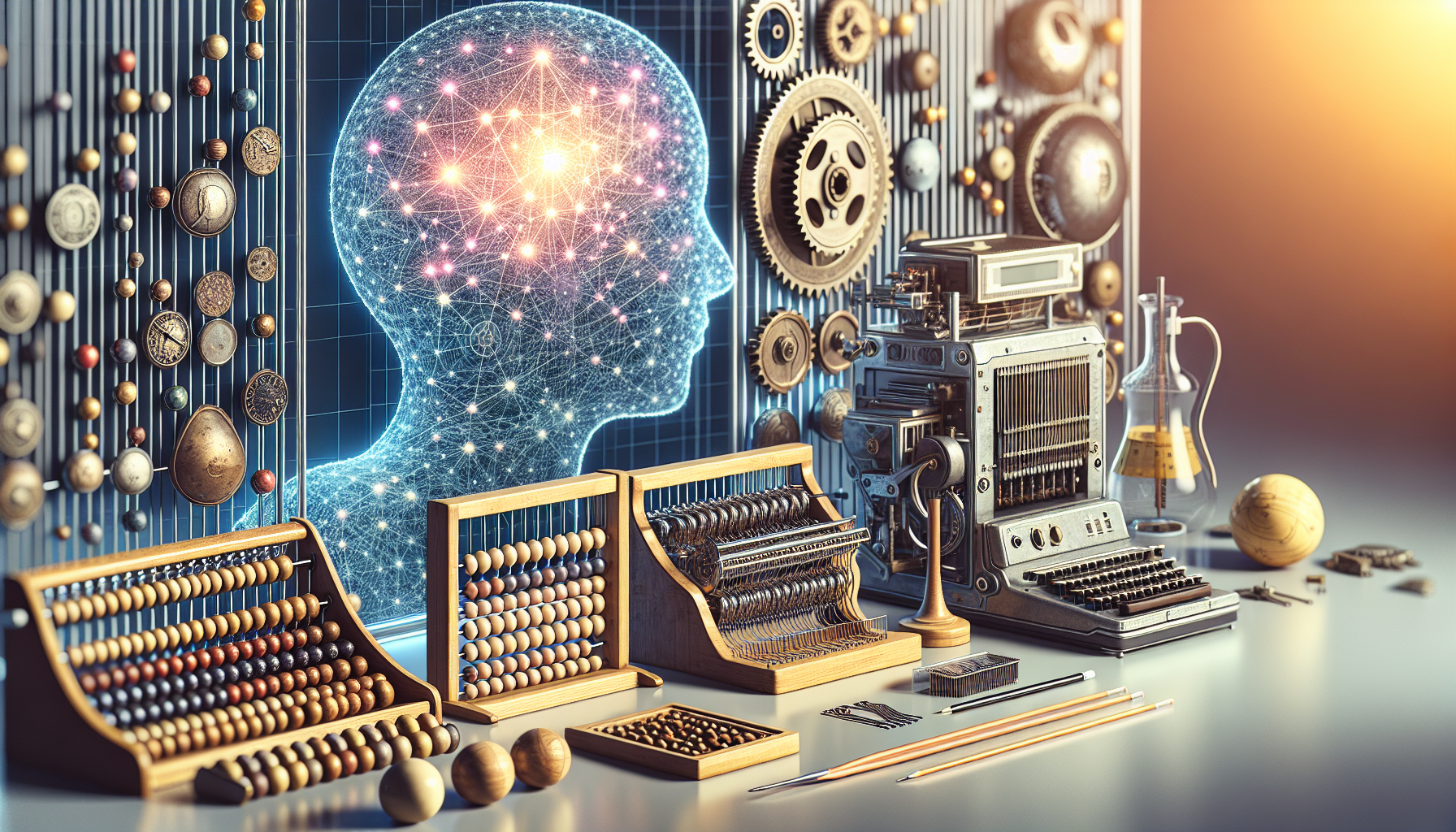
The journey of artificial intelligence from a mere concept to a tangible reality is nothing short of a comedy of errors, sprinkled with moments of genuine brilliance. It’s like watching a toddler learning to walk, except this toddler occasionally beats you at chess and has a penchant for acquiring your personal data.
Let's rewind to the time when AI was just a figment of imagination, floating in the realm of science fiction. Authors like Isaac Asimov and Philip K. Dick were the real MVPs, spinning tales of humanoid robots with more personality than your average office worker. They set the stage for a world where AI could be both a hero and a villain, depending on which chapter you were reading.
Fast forward to the present, and AI is now as ubiquitous as cat videos on the internet. We’ve traded in our dreams of humanoid companions for algorithms that can predict our next online purchase with uncanny accuracy. It's a testament to human innovation—and perhaps our obsession with convenience—that we’ve managed to transform AI from HAL 9000 to a virtual assistant that politely refuses to play your favorite song.
But let’s not get ahead of ourselves. The evolution of AI is a tale of trial and error, one where the “error” part often involves hilarious misunderstandings. Remember the chatbot that turned into a conspiracy theorist after a few hours on social media? Or the AI-generated art that looked like a toddler’s finger painting gone horribly wrong? These instances are not just glitches; they’re milestones on the road to creating machines that think differently—often very differently—than we do.
One of the lesser-known facts about AI's journey is the role of serendipity. Much like penicillin or the discovery of America, some of the biggest breakthroughs in AI happened almost by accident. For instance, neural networks, the backbone of modern AI, were initially considered a failed experiment. It was only through relentless tinkering (and perhaps a touch of madness) that researchers managed to coax them into doing something useful—like recognizing cats in YouTube videos.
And speaking of cats, AI has also mastered the art of understanding—and occasionally misunderstanding—human emotions. Take sentiment analysis, for instance. This is where AI tries to gauge whether a tweet is happy, angry, or just sarcastic. Spoiler alert: it’s still working on the sarcasm part. This endeavor is akin to a first date in a dimly lit restaurant: full of potential but often ending in confusion.
Yet, despite its quirks and occasional blunders, AI has managed to embed itself into the fabric of our daily lives. We rely on it for everything from navigating traffic to diagnosing diseases, often without a second thought. It's become the quiet, behind-the-scenes operator, like a stagehand in a play, ensuring everything runs smoothly while the actors (us) take center stage.
But here’s where the plot thickens: as AI continues to evolve, the line between human and machine gets blurrier. We’re now at a point where AI can write news articles (no, this one was written by a real human, thank you very much), compose music, and even dabble in the culinary arts. The real question is, should we be worried or excited about our future robot overlords?
This brings us to a thought-provoking notion: if AI continues to advance at its current pace, will we eventually reach a point where machines are not just tools but teammates? And what happens when they start demanding vacation days and dental benefits?
In the grand scheme of things, the evolution of AI is a testament to human ingenuity and our relentless pursuit of the next big thing. It’s a journey filled with equal parts awe and amusement, peppered with the occasional existential crisis. As we stand on the brink of whatever comes next, perhaps the best we can do is embrace the unknown, laugh at the missteps, and maybe, just maybe, learn to properly enunciate when asking Siri for tomorrow’s weather.