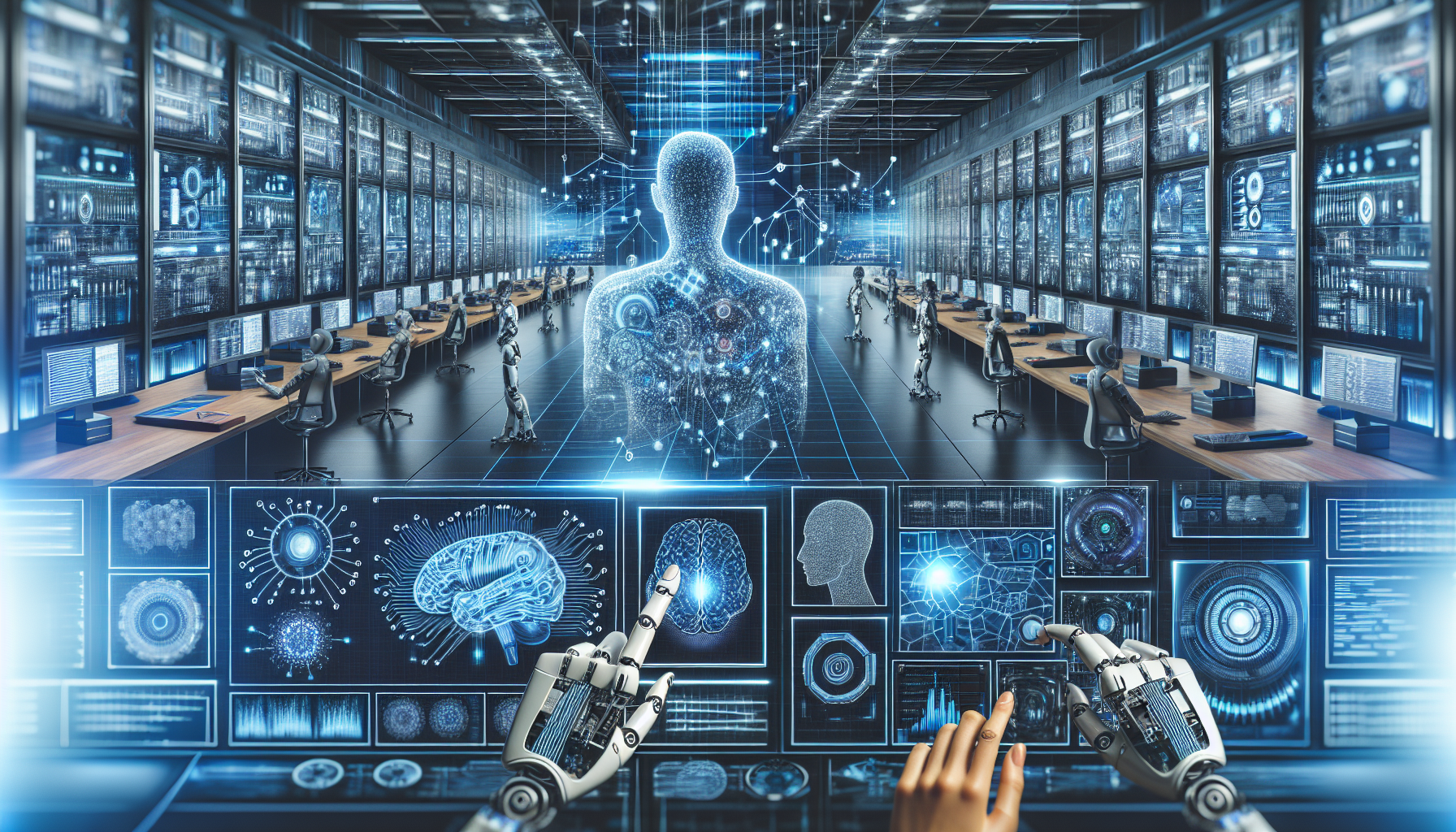
AI in Entertainment: Transforming Media and Gaming through Comparative Analysis
March 20, 2026
Artificial Intelligence (AI) has become a pivotal force in reshaping the entertainment industry, offering unprecedented advancements in both media and gaming. The integration of AI technologies is not merely an enhancement of existing frameworks but a transformative influence that alters creation, consumption, and interaction paradigms. Through a comparative analysis of its impacts on media and gaming, the multifaceted role of AI emerges, uncovering both the opportunities and challenges it presents.
In the realm of media, AI has significantly streamlined production processes, enabling creators to harness vast datasets to craft personalized content. Algorithms now predict audience preferences with remarkable accuracy, guiding content creators in tailoring their outputs to meet the nuanced tastes of diverse demographics. This level of personalization has not only enhanced viewer satisfaction but has also contributed to the expansion of niche markets that were previously underexplored.
Conversely, AI's role in gaming has been even more dynamic, affecting game design, user interaction, and player experience. Unlike media, where AI primarily aids in content curation, in gaming, AI acts as an active participant. It powers non-player characters (NPCs) with adaptive behaviors, creating more immersive and challenging environments. The procedural generation of game worlds, facilitated by AI, offers players unique experiences that evolve with their actions, thereby increasing replayability and engagement.
Despite these distinct applications, AI in both media and gaming shares commonalities in terms of enhancing realism. In filmmaking, AI-driven visual effects enable realistic simulations that were previously unattainable. Similarly, gaming benefits from AI through realistic physics engines and lifelike character animations. These advancements blur the lines between virtual and reality, offering audiences immersive experiences that transcend traditional boundaries.
However, the impact of AI extends beyond technological enhancements. In media, ethical considerations arise regarding data privacy and algorithmic bias. The reliance on AI to determine content recommendations can inadvertently reinforce echo chambers, limiting exposure to diverse perspectives. Similarly, in gaming, the use of AI-driven analytics raises concerns about user data exploitation and the potential for manipulative design practices aimed at maximizing user engagement.
The economic implications of AI in both sectors are substantial. In media, AI-driven automation has streamlined operations, reducing costs and expanding access to high-quality content for a broader audience. This democratization of content creation challenges traditional media conglomerates and empowers independent creators. In gaming, AI has sparked a renaissance, with indie developers leveraging AI tools to create innovative experiences that rival those of established studios.
Nonetheless, the integration of AI in entertainment is not without its challenges. The rapid pace of technological advancement necessitates continuous adaptation, posing a significant challenge for companies striving to stay competitive. Moreover, the evolving landscape demands a workforce proficient in AI technologies, highlighting the need for education and training initiatives to bridge the skills gap.
Looking ahead, the potential of AI in entertainment is vast and largely untapped. The fusion of AI with emerging technologies such as virtual reality (VR) and augmented reality (AR) promises to redefine the boundaries of interactive storytelling. In media, AI could facilitate real-time content generation, offering viewers an active role in narrative development. In gaming, AI-driven adaptive learning systems could personalize game difficulty, catering to individual player skill levels.
The ongoing evolution of AI in entertainment prompts a reflection on the nature of creativity itself. As machines increasingly contribute to artistic processes, the definition of creativity is being challenged. Can AI-generated content truly be considered art, or is it merely a reflection of human inputs and algorithms? This question invites further exploration, urging creators, consumers, and technologists alike to ponder the future of entertainment in an AI-driven world.
Thus, as AI continues to transform media and gaming, it is imperative to balance innovation with ethical considerations, ensuring that technological advancements serve to enrich human experience rather than constrain it. The journey of AI in entertainment has only just begun, and its trajectory will undoubtedly shape the narratives and experiences of generations to come.