AI and the Renaissance of Creativity: A Historical Perspective on Art's New Frontier
March 7, 2026
Art, in its myriad forms, has always been a mirror of human expression, reflecting our deepest thoughts and emotions. Yet, as artificial intelligence takes its place in this timeless tapestry, a new chapter unfolds—a Renaissance of creativity that challenges and inspires. Far from a mere tool, AI emerges as a collaborator, a muse that reinvigorates the artistic process and invites us to reimagine the boundaries of creativity.
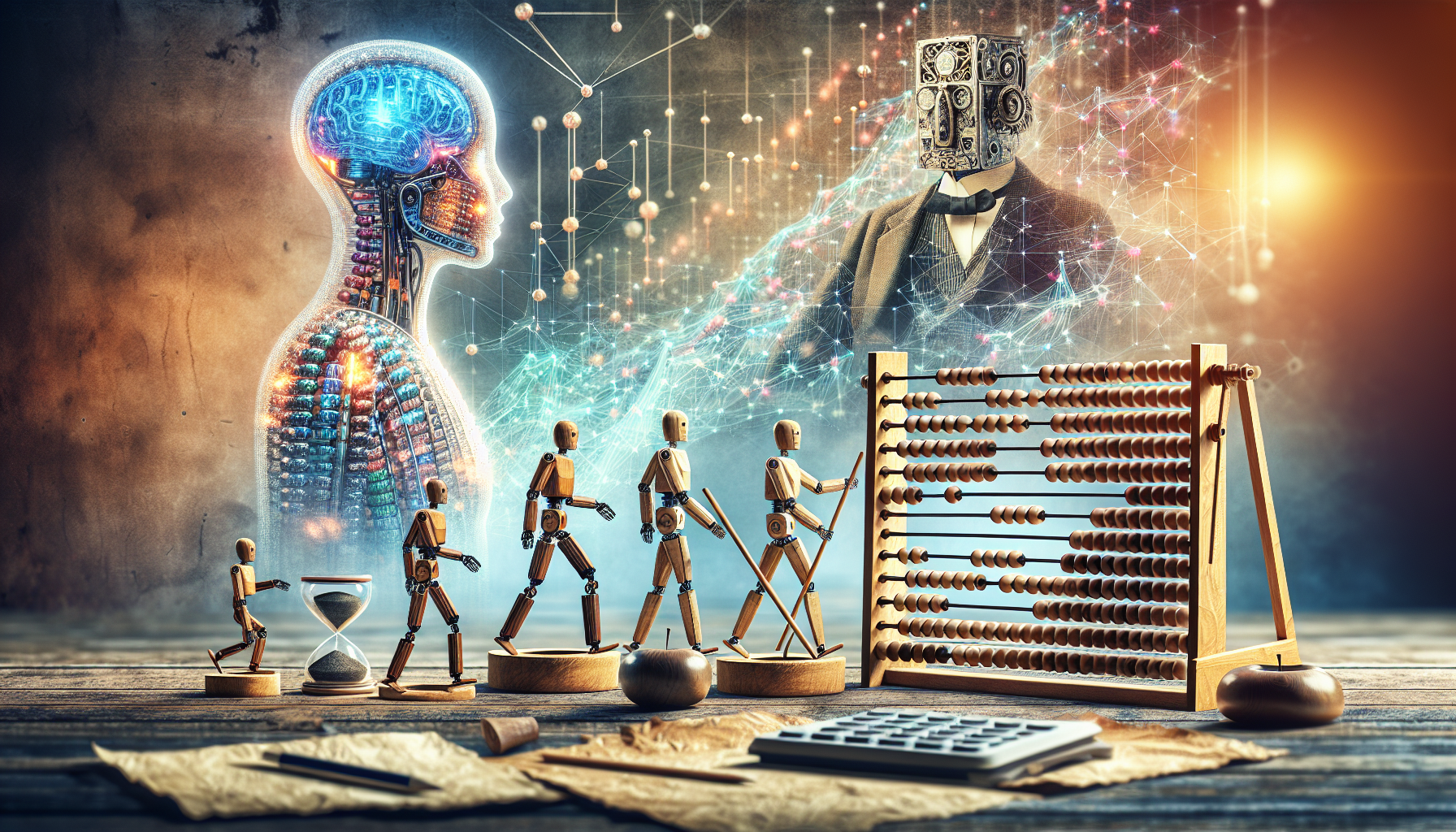
The notion of machines engaging in artistic creation might seem like a modern marvel, yet its roots extend back through history, entwined with humanity's ceaseless quest to blend technology and art. Consider the ancient automatons, mechanical marvels that entertained and inspired awe with their lifelike movements. These mechanical creations, though primitive by today's standards, sowed the seeds of merging technology with artistry, a lineage that AI now proudly continues.
Throughout the ages, artists have harnessed the tools of their time, from the invention of the camera obscura to the emergence of digital media, each innovation expanding the palette of artistic expression. In this continuum, AI stands not as a replacement for human creativity but as its bold new companion, challenging preconceived notions and encouraging artists to venture into uncharted territories.
AI's influence on art is profound and multifaceted, reshaping how we conceive, create, and experience artistic endeavors. It serves not only as a tool for generating novel forms but also as a catalyst for introspection and dialogue. By analyzing vast datasets, AI can uncover patterns and insights that elude the human eye, offering fresh perspectives that can lead to groundbreaking artistic movements.
One of the most awe-inspiring aspects of AI in art is its ability to synthesize styles, combining the classical with the contemporary to create something entirely new. This synthesis echoes the spirit of past artistic revolutions, where innovation was born from the fusion of old and new. Just as the Impressionists challenged conventional norms to capture the ephemeral beauty of light, AI-driven art invites us to reconsider the very essence of creativity.
Despite the technological sophistication of AI, it remains deeply rooted in human creativity. The algorithms that drive it are crafted by human hands, and the data it learns from is a reflection of our own cultural and historical narratives. In this sense, AI becomes a bridge between the past and the future, an embodiment of our collective artistic heritage imbued with the potential to transcend it.
As AI-generated art gains prominence, it prompts a reevaluation of authorship and originality. Who is the true artist—the programmer, the machine, or perhaps both? This question echoes through the corridors of art history, where collaboration and influence have always blurred the lines of creation. In this light, AI becomes a symbol of artistic evolution rather than disruption, a testament to our ability to adapt and innovate.
In the realm of music, AI composes symphonies that resonate with the echoes of classical masters, yet pulsate with modern sensibilities. Visual artists harness AI to paint canvases that dance with colors and forms previously unimaginable. Writers explore narratives woven by algorithms that mimic human storytelling, challenging us to redefine what it means to be an author.
This convergence of AI and art is more than a technological phenomenon; it is a cultural movement that inspires us to dream bigger. AI's capacity to learn and adapt means it is not static but an ever-evolving partner in the creative process. It challenges artists to push boundaries, explore new mediums, and embrace the unknown. It is a reminder that creativity knows no limits and that the union of human ingenuity and machine intelligence can lead to extraordinary outcomes.
As we stand on the threshold of this new artistic era, we find ourselves questioning not only the role of AI in art but also the nature of creativity itself. What does it mean to create? How do we define the value of art in a world where machines can compose, paint, and write? These questions invite us to look inward, to reconsider our relationship with art and technology, and to imagine the future possibilities that lie ahead.
The journey of art and AI is just beginning, a narrative still being written. As we embrace this new frontier, we are called to be both creators and curators, shaping a legacy that honors the past while boldly stepping into the future. In doing so, we are reminded that the heart of art—its power to move, inspire, and transform—remains unchanged. AI, with all its potential, becomes not a replacement for our humanity, but a celebration of it. In this dance of creativity, we are not alone; we are partners, exploring the boundless possibilities of what art can be.